
If I wanted to, there are probably a lot of letters that I could put after my name, though only one of them would bear any educational significance. Clare D, BA, BPD, SSA, PCOS, HSP. You may or may not know what all of these stand for, and some are more significant to me than others. You’re welcome to look these up, though I can’t promise it’ll be the first thing you find, so maybe you could make up your own versions of what they stand for instead. They are mostly acronyms that I could used to describe something about me, including a couple of diagnoses.
Sometimes all these letters can feel a bit too much, a little like they’re whirling around me and I can’t see through the jumble. That’s before you even get to the adjectives that surround the diagnoses too; depressed, anxious, tired, struggling, sad, strange (mostly this is meant endearingly). Quite often these words are true, and there are definitely more positive words that people have used to describe me too: kind, resilient, thoughtful, creative, brave, funny (though often people tell me in a slightly surprised tone of voice).
Adjectives can encourage and celebrate people’s gifts and character, but it is good to be aware that sometimes they can also put them in a bit of a box too. At school I would get ‘shy’ or ‘quiet’ over and over again. I may be wrong, but I don’t remember any teacher to find out why I was quiet or shy, or considering whether there was something deeper underneath.
Technically I fit under the definition of disabled too – my mental health conditions, both by themselves and combined, have a substantial and long-term negative effect on my ability to do normal daily activities. I’m never quite sure when to use this description – I often feel like a fraud if I claim it, but like I’m trying to pretend I have a higher capacity than I do if I don’t.
At this point I already feel like there are clouds of words blowing around me, too chaotic to grasp on to, too loud to hear any word or definition that stands out.


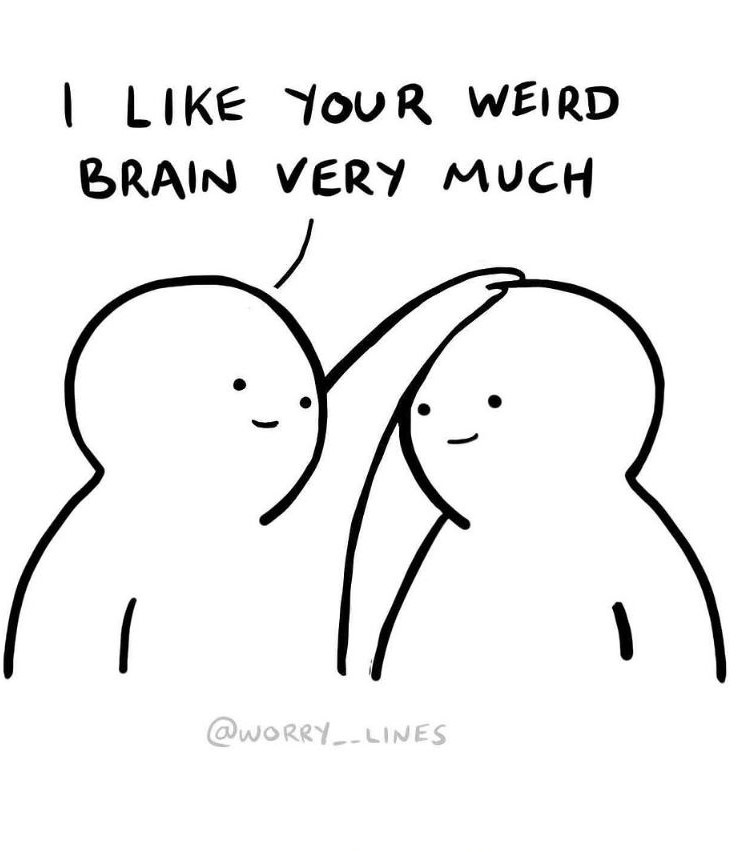

And don’t get me started on the personality types (sorry, I’m really not a fan). I get that they can help you understand someone else a bit better, but I feel like far too often they are used to explain away problematic behaviour, or as a attempt to take a short cut in getting to know someone, rather than taking the time to understand them individually.
I’m not even a fan of the introvert – extrovert scale, I’ll admit that this can be helpful, but it feels more complicated than that, especially when mental illness is involved. A lot of people assume I’m an introvert, but really it’s social anxiety that often stops me from getting involved in social gatherings, not a desire to be on my own, or a tendency towards being energised by time alone. In the same way, how are personality types supposed to work if you are diagnosed with a personality disorder?
Recently I received a new diagnosis. It’s been a lot to get my head around, but I think overall it has helped me to better understand my brain. Whilst diagnoses can be wrong, they have been accurate, as far as I am aware, for me. After months of uncertainty in some cases, the diagnosis feels solid, reassuring. When a condition remains un-diagnosed it can often lead to confusion, uncertainty over how something can be treated, and less answers over what will happen next. I know that there are others who have experienced this far more acutely than myself.
Diagnoses don’t define me
I’ve often found that it’s not personality descriptors, my jobs or my hobbies that I feel most define me, but my long term, mental health diagnoses. I don’t mean this in a particularly negative way, not all the time anyway.
Sometimes, quite often, I am acutely aware of what these conditions stop me from doing, but there can also be a weird sense of comfort in them. In some cases, I’ve become so used to them, that I’m not quite sure what I would do if the diagnosis or condition was suddenly taken away.
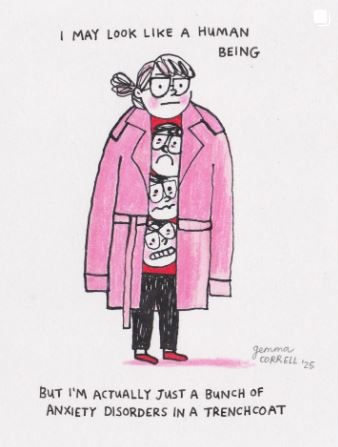
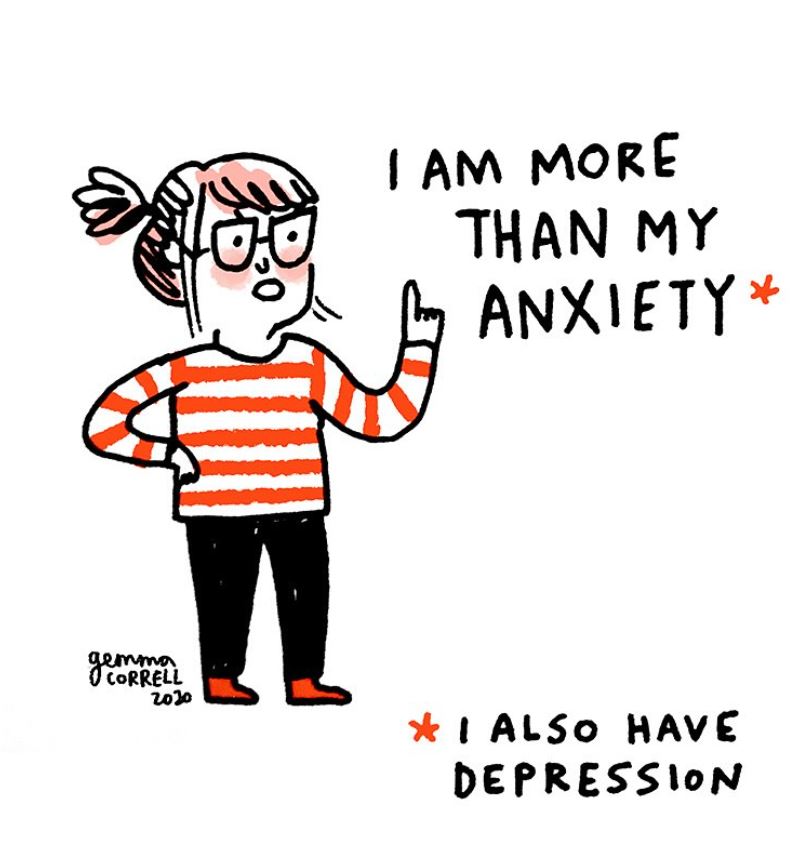
But I think it’s important for me to remember that they are not my identity, that I am not defined by my depression, anxiety, or BPD. As a Christian, I feel such a relief that my identity is found in something outside of myself.
It can be so easy to start putting our worth and identity in what we do and how others perceive us. As someone who can fluctuate between high-functioning and lying in bed for a significant portion of the day, who can often mask anxiety but can also become very easily overwhelmed, that would make my identity as unstable and changeable as an emotional mood swing might be.
But in the pages of the Bible, the gospels of Matthew, Mark, Luke and John, we see over and over again how Jesus sees people as they truly are, as individuals who reflect the image of God. He didn’t assume that every person with an illness or disability wanted healing, but asked people ‘what do you want me to do for you?’ He saw and sees the person, not their diagnoses.
The Bible says that those who follow Christ are found in him. As we place our trust in Christ, we are adopted into God’s family, we become children of our Heavenly Father. We are given the Holy Spirit who dwells within us and we become part of the global church, united to Christ.
Apologies for the jargon and do ask me more if you are interested. The important thing is that for Christians, our identity relies entirely on Christ, on our unshakeable, unchanging God.

Diagnoses are part of my story
I am, however, wary that as Christians we can be quick to remind one another of the above, but can overlook the very real struggles and experiences that each other face.
Jesus didn’t approach every person with the exact same words in the exact same way. He treated each person individually, because each person came with different experiences, struggles, joys and stories.
Whilst I don’t want to be treated as though I am unable to do things that many others can, I don’t always want to be treated as though I don’t have any mental health conditions either. The reality is that, in many cases, I experience things differently to some one who does not have depression, anxiety or BPD. And so I don’t want to pretend that these conditions are not significant to me.

Diagnoses do help me
These conditions and their symptoms do impact how I experience things, and so the diagnoses I have received have helped me to understand why I struggle in certain ways. This, in turn, has helped me to navigate difficulties, avoid things that are unhelpful or harmful to me, and develop ways of coping that are healthier and more sustainable.
Learning about my diagnoses has helped me to be less critical of myself when I have really struggled with things that others have seemingly found easy. Just as learning about other people’s diagnoses has helped me to better understand what is helpful or unhelpful to them, and to understand a little more of their experience.
Not all people experience conditions in the same way and so knowing about someones diagnosis doesn’t mean that you know them, but it can be a good start, or can show a person that you care about their struggle and that you want to know more.
If you know me, feel free to ask more about this, or about my new diagnosis. It helps when I understand more about my diagnoses, and it can help even more when other people understand how I experience things too.
My diagnoses do not define me. They are not my identity. They are, however, an important part of my story and they do help me to ask for the support I need and to find the things that help.


